




Xiaolong Zheng Editor at IgMin Research
We foster discussions that bridge multiple fields for a more comprehensive understanding.
Biography
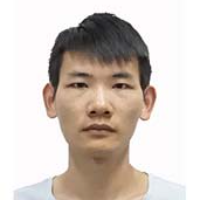
Xiaolong Zheng received the B.S. degree in automation from Yangtze University College of Technology and Engineering, Jingzhou, China, in 2013, the M.S. degree in control theory and control engineering from Bohai University, Jinzhou, China, in 2016, and the Ph.D. degree in control science and engineering from Harbin Institute of Technology, Harbin, China, in 2020.
He is currently an Assistant Professor with the Research Institute of Intelligent Control Systems, School of Aeronautics, Harbin Institute of Technology. His research interests include adaptive control, neural networks, reinforcement learning and their applications. He has published over 30 International journal papers (including 13 IEEE Transactions series papers). According to Google Scholar, his published papers have received over 2271 citations with H-index 20. He has 11 authorized invention patents. These research results have attracted great attention from the domestic and international scholars.
Research Interest
Nonlinear Systems; Adaptive Control; Neural Networks; Robotics; Artificial Intelligence.
Editor
Work Details
Assistant Professor
Harbin Institute of Technology
School of Aeronautics
China
 0000-0003-0369-7221
 Contribution by Topic Area
Why publish with us?
Global Visibility – Indexed in major databases
Fast Peer Review – Decision within 14–21 days
Open Access – Maximize readership and citation
Multidisciplinary Scope – Biology, Medicine and Engineering
Editorial Board Excellence – Global experts involved
University Library Indexing – Via OCLC
Permanent Archiving – CrossRef DOI
APC – Affordable APCs with discounts
Citation – High Citation Potential
Which articles are now trending?
Research Articles
- Potentially Toxic Metals in Cucumber Cucumis sativus Collected from Peninsular Malaysia: A Human Health Risk Assessment
- Sensor-based Sorting using De-XRT Sensor Applied to a Greenfield Copper Ore Project in Southern Brazil
- A Study to Determine the Reason for Lower Pregnancy Rates in Younger Women with Diminished Oocyte Reserve-less Chance of Implanting vs. Fetal Demise
- Microgravity Employment in Archaeology – Available Experience and Future Perspectives
- Modeling of an Electric-fired Brick Oven, Directly Heated
- Contamination in Heat Exchangers: Types, Energy Effects and Prevention Methods