


Help ?

IGMIN: We're glad you're here. Please click 'create a new query' if you are a new visitor to our website and need further information from us.

If you are already a member of our network and need to keep track of any developments regarding a question you have already submitted, click 'take me to my Query.'

Search

Organised by  IgMin Fevicon

Regional sites

Browse by Subjects

Welcome to IgMin Research – an Open Access journal uniting Biology, Medicine, and Engineering. We’re dedicated to advancing global knowledge and fostering collaboration across scientific fields.

Browse by Sections

At IgMin Research, we bridge the frontiers of Biology, Medicine, and Engineering to foster interdisciplinary innovation. Our expanded scope now embraces a wide spectrum of scientific disciplines, empowering global researchers to explore, contribute, and collaborate through open access.

Members

Our commitment is to promote shared insights across disciplines for rapid scientific growth.

Articles

Our commitment is to promote shared insights across disciplines for rapid scientific growth.

Explore Content

Our commitment is to promote shared insights across disciplines for rapid scientific growth.

Identify Us

Our commitment is to promote shared insights across disciplines for rapid scientific growth.

IgMin Corporation

Welcome to IgMin, a leading platform dedicated to enhancing knowledge dissemination and professional growth across multiple fields of science, technology, and the humanities. We believe in the power of open access, collaboration, and innovation. Our goal is to provide individuals and organizations with the tools they need to succeed in the global knowledge economy.

Publications Support
publications.support@igmin.org
E-Books Support
ebooks.support@igmin.org
Webinars & Conferences Support
webinarsandconference@igmin.org
Content Writing Support
contentwriting.support@igmin.org

Search

Select Language

Explore Section

Content for the explore section slider goes here.

Abstract

Abstract at IgMin Research

Our commitment is to promote shared insights across disciplines for rapid scientific growth.

General-science Group Research Article Article ID: igmin327

A Model of the Enforcement of Laws in Tramadol Drug Abusers

Mathematics DOI10.61927/igmin327 Affiliation

Affiliation

    Department of Mathematics and Computer Science, Mizoram University, Tanhril, Aizawl, 796004, Mizoram, India

    #These authors contributed equally to this work

65
VIEWS
31
DOWNLOADS
Connect with Us

Abstract

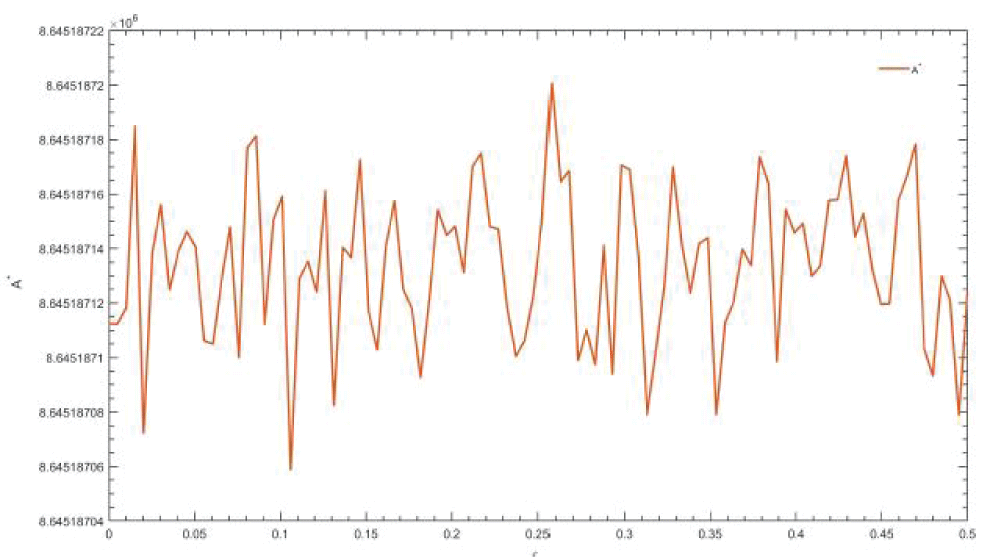
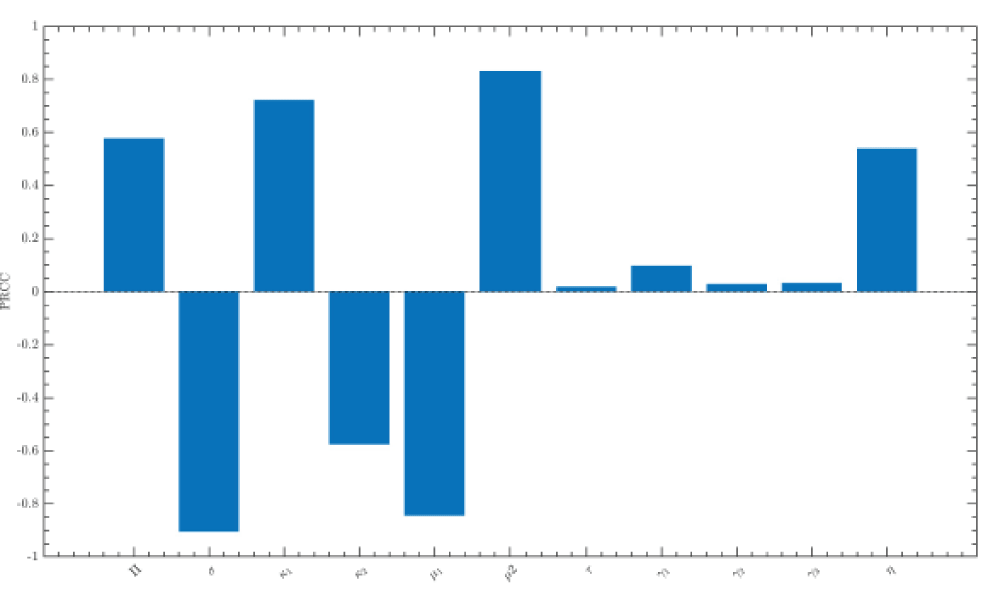
Tramadol initially use as an analgesic which lead to addiction and overdose worldwide due to prolong consumption, particularly in low and middle income countries. This paper deals with a mathematical approach of Multiple Relapse Tramadol Abuse Model (MRTAM) to analyze affected population with time domain. This model is a non-linear compartmental framework, which simulates the abuse progression. Parameters such as prevention rate (σ), relapse rate (ξ2), treatment rate (ξ1), and law enforcement (η) influence the abuse population and the reproduction number (R0). Eigenvalues of the dynamics are derived to analyze the stability and behavior of the system. Results show that the system is highly sensitive to prescription inflow, progression and prevention parameters. Endemic equilibrium is obtained and also presented the analysis of bifurcation and partial rank correlation coefficient (PRCC) to quantify and assess the influence of various parameters on the abuse population. 
MSC Classification: 92C60; 92D25
Figures

References

    1. Caldwell WK, Freedman B, Settles L, Thomas MM, Camacho ET, Wirkus S. The Vicodin abuse problem: a mathematical approach. J Theor Biol. 2019 Dec 21;483:110003. doi:10.1016/j.jtbi.2019.110003. Epub 2019 Sep 9. PMID:31513802.
    2. White E, Comiskey C. Heroin epidemics, treatment and ODE modelling. Math Biosci. 2007 Jul;208(1):312–324. doi:10.1016/j.mbs.2006.10.008. Epub 2006 Nov 7. PMID:17174346.
    3. Hogea CS, Murray BT, Sethian JA. Simulating complex tumor dynamics from avascular to vascular growth using a general level-set method. J Math Biol. 2006 Jul;53(1):86–134. doi:10.1007/s00285-006-0378-2. Epub 2006 Apr 28. PMID:16791651.
    4. Mandal A, Tiwari PK, Pal S. Impact of awareness on environmental toxins affecting plankton dynamics: a mathematical implication. J Appl Math Comput. 2021;66:369–395. doi:10.1007/s12190-020-01441-5.
    5. Nazmul SK, Pal S. Dynamics of an infected prey–generalist predator system with the effects of fear, refuge, and harvesting: deterministic and stochastic approach. Eur Phys J Plus. 2022;137:138. doi:10.1140/epjp/s13360-022-02348-9.
    6. United Nations Office on Drugs and Crime (UNODC). World Drug Report 2024. Vienna: United Nations Office on Drugs and Crime; 2024. Available from: https://www.unodc.org/unodc/en/data-and-analysis/world-drug-report-2024.html
    7. World Health Organization. WHO Expert Committee on Drug Dependence: forty-sixth report. Geneva: World Health Organization; 2024. WHO Technical Report Series; No. 1057. Available from: https://www.who.int/groups/ecdd
    8. World Health Organization. WHO Expert Committee on Drug Dependence: forty-seventh report. Geneva: World Health Organization; 2025. WHO Technical Report Series; No. 1065. Available from: https://www.who.int/groups/ecdd
    9. Ambekar A, Agrawal A, Rao R, Mishra AK, Khandelwal SK, Chadda RK; National Survey on Extent and Pattern of Substance Use in India Investigators. Magnitude of substance use in India. New Delhi: Ministry of Social Justice and Empowerment, Government of India; 2019. Available from: https://www.lgbrimh.gov.in/resources/Addiction%20Medicine/elibrary/magnitude%20substance%20abuse%20india.pdf
    10. Walwyn WM, Miotto KA, Evans CJ. Opioid pharmaceuticals and addiction: the issues, and research directions seeking solutions. Drug Alcohol Depend. 2010 May 1;108(3):156–165. doi:10.1016/j.drugalcdep.2010.01.001. Epub 2010 Feb 25. PMID:20188495; PMCID:PMC3072810.
    11. Befekadu GK, Zhu Q. Optimal control of diffusion processes pertaining to an opioid epidemic dynamical model with random perturbations. J Math Biol. 2019 Apr;78(5):1425–1438. doi:10.1007/s00285-018-1314-y. Epub 2018 Dec 4. PMID:30515526.
    12. Nielsen S, MacDonald T, Johnson JL. Identifying and treating codeine dependence: a systematic review. Med J Aust. 2018 Jun 4;208(10):451–461. doi:10.5694/mja17.00749. PMID:29848240.
    13. Mukherjee D, Shukla L, Saha P, Mahadevan J, Kandasamy A, Chand P, Benegal V, Murthy P. Tapentadol abuse and dependence in India. Asian J Psychiatr. 2020 Mar;49:101978. doi:10.1016/j.ajp.2020.101978. Epub 2020 Feb 22. PMID:32120298.
    14. Fulford GR, Barnes B. Mathematical modeling with case studies: a differential equation approach using Maple and MATLAB. London: Taylor & Francis; 2002.
    15. Nyabadza F, Coetzee L. A systems dynamic model for drug abuse and drug-related crime in the Western Cape Province of South Africa. Comput Math Methods Med. 2017;2017:4074197. doi:10.1155/2017/4074197. Epub 2017 May 7. PMID:28555161; PMCID:PMC5438861.
    16. Brauer F, Chavez CC, Feng Z. Mathematical models in epidemiology. New York: Springer; 2019.
    17. Martcheva M. An introduction to mathematical epidemiology. New York: Springer; 2015.
    18. Srivastav AK, Ghosh M, Chandra P. Modeling dynamics of the spread of crime in a society. Stoch Anal Appl. 2019;37:991–1011. doi:10.1080/07362994.2019.1636658.
    19. Mamo DK, Kinyanjui MN, Teklu SW, Hailu GK. Mathematical modeling and analysis of the co-dynamics of crime and drug abuse. Sci Rep. 2024 Nov 2;14(1):26461. doi:10.1038/s41598-024-75034-8. PMID:39488534; PMCID:PMC11531553.
    20. Adams EH, Breiner S, Cicero TJ, Geller A, Inciardi JA, Schnoll SH, Senay EC, Woody GE. A comparison of the abuse liability of tramadol, NSAIDs, and hydrocodone in patients with chronic pain. J Pain Symptom Manage. 2006 May;31(5):465–476. doi:10.1016/j.jpainsymman.2005.10.006. PMID:16716877.
    21. Degenhardt L, Grebely J, Stone J, Hickman M, Vickerman P, Marshall BDL, Bruneau J, Altice FL, Henderson G, Rahimi-Movaghar A, Larney S. Global patterns of opioid use and dependence: harms to populations, interventions, and future action. Lancet. 2019 Oct 26;394(10208):1560–1579. doi:10.1016/S0140-6736(19)32229-9. Epub 2019 Oct 23. PMID:31657732; PMCID:PMC7068135.
    22. McCabe JE. What works in policing?: the relationship between drug enforcement and serious crime. Police Q. 2008;11:389–409. doi:10.1177/1098611107306863.
    23. Parmar A, Narasimha VL, Nath S. National drug laws, policies, and programs in India: a narrative review. Indian J Psychol Med. 2024 Jan;46(1):5–13. doi:10.1177/02537176231170534. Epub 2023 Jun 11. PMID:38524944; PMCID:PMC10958082.
    24. Dauhoo MZ, Korimboccus BSN, Issack SB. On the dynamics of illicit drug consumption in a given population. IMA J Appl Math. 2013;78:432–448. doi:10.1093/imamat/hxr058.
    25. Vallath N, Tandon T, Pastrana T, Lohman D, Husain SA, Cleary J, Ramanath G, Rajagopal MR. Civil society-driven drug policy reform for health and human welfare—India. J Pain Symptom Manage. 2017 Mar;53(3):518–532. doi:10.1016/j.jpainsymman.2016.10.362. Epub 2016 Dec 30. PMID:28042065.
    26. Woody GE, Senay EC, Geller A, Adams EH, Inciardi JA, Schnoll S, Muñoz A, Cicero TJ. An independent assessment of MEDWatch reporting for abuse/dependence and withdrawal from Ultram (tramadol hydrochloride). Drug Alcohol Depend. 2003 Nov 24;72(2):163–168. doi:10.1016/s0376-8716(03)00198-4. PMID:14636971.
    27. Muli FM. Mathematical analysis of drug and substance abuse model with treatment and policing. J Appl Math. 2025;2025:6666148. doi:10.1155/2025/6666148.
    28. Mamo DK, Kinyanjui MN, Teklu SW, Hailu GK. Mathematical modeling and analysis of the co-dynamics of crime and drug abuse. Sci Rep. 2024 Nov 2;14(1):26461. doi:10.1038/s41598-024-75034-8. PMID:39488534; PMCID:PMC11531553.
    29. Mikhaylov A, Bhatti IM, Dinçer H, Yüksel S. Integrated decision recommendation system using iteration-enhanced collaborative filtering, golden cut bipolar for analyzing the risk-based oil market spillovers. Comput Econ. 2022 Nov 10;60:1–34. doi:10.1007/s10614-022-10341-8. Epub ahead of print. PMID:36406765; PMCID:PMC9647255.
    30. Irshad AS, Zakir MN, Rashad SS, Lotfy ME, Mikhaylov A, Elkholy MH, Pinter G, Senjyu T. Comparative analyses and optimizations of hybrid biomass and solar energy systems based upon a variety of biomass technologies. Energy Convers Manag X. 2024;23:100640. doi:10.1016/j.ecmx.2024.100640.
    31. Inciardi JA, Cicero TJ, Muñoz A, Adams EH, Geller A, Senay EC, Woody GE. The diversion of Ultram, Ultracet, and generic tramadol HCl. J Addict Dis. 2006;25:53–58. doi:10.1300/J069v25n02_08.
    32. Ehrenreich H, Poser W. Dependence on tramadol. Clin Investig. 1993;72:76. doi:10.1007/BF00231123.
    33. Freye E, Levy J. Acute abstinence syndrome following abrupt cessation of long-term use of tramadol (Ultram): a case study. Eur J Pain. 2000;4:307–311. doi:10.1053/eujp.2000.0187.
    34. Sarkar S, Nebhinani N, Singh SM, Mattoo SK, Basu D. Tramadol dependence: a case series from India. Indian J Psychol Med. 2012 Jul;34(3):283–285. doi:10.4103/0253-7176.106038. PMID:23440178; PMCID:PMC3573583.
    35. Senay EC, Adams EH, Geller A, Inciardi JA, Muñoz A, Schnoll SH, Woody GE, Cicero TJ. Physical dependence on Ultram (tramadol hydrochloride): both opioid-like and atypical withdrawal symptoms occur. Drug Alcohol Depend. 2003;69:233–241. doi:10.1016/S0376-8716(02)00321-6.
    36. Leo RJ, Narendran R, DeGuiseppe B. Methadone detoxification of tramadol dependence. J Subst Abuse Treat. 2000 Oct;19(3):297–299. doi:10.1016/s0740-5472(00)00098-2. PMID:11027901.
    37. Tjäderborn M, Jönsson AK, Ahlner J, Hägg S. Tramadol dependence: a survey of spontaneously reported cases in Sweden. Pharmacoepidemiol Drug Saf. 2009 Dec;18(12):1192–1198. doi:10.1002/pds.1838. PMID:19827010.
    38. Duke AN, Bigelow GE, Lanier RK, Strain EC. Discriminative stimulus effects of tramadol in humans. J Pharmacol Exp Ther. 2011;338:255–262. doi:10.1124/jpet.111.181131.
    39. Preston KL, Jasinski DR, Testa M. Abuse potential and pharmacological comparison of tramadol and morphine. Drug Alcohol Depend. 1991;27:7–17. doi:10.1016/0376-8716(91)90081-9.
    40. Pandey D. Opioids in India: managing pain and addiction. New Delhi: Social and Political Research Foundation; 2020. Available from: https://sprf.in/opioids-in-india-managing-pain-and-addictions/
    41. Narcotics Control Bureau. Annual report 2023–24. New Delhi: Ministry of Home Affairs, Government of India; 2024. Available from: https://www.mha.gov.in/sites/default/files/AnnualReport27122024.pdf

Similar Articles

Utilising Phytoremediation in Green Technologies: Exploring Natural Means of Environmental Clean-up
LM Kalimoldina, Askarova Shinar Kuanganovna, Zhaksybayeva Gulzhan Satzhankyzy, Zh.E. Shaikhova and Sultangaziy Eva Gulbaram Sapina
DOI10.61927/igmin276
A Case of Facial Erysipelas with Necrosis of the Upper Eyelid
Mariana LevkivYaroslav Nahirnyi, Vasyl Kopcha, Nataliya Tverdokhlib and Ivan Stefaniv
DOI10.61927/igmin241

Why publish with us?

  • Global Visibility – Indexed in major databases

  • Fast Peer Review – Decision within 14–21 days

  • Open Access – Maximize readership and citation

  • Multidisciplinary Scope – Biology, Medicine and Engineering

  • Editorial Board Excellence – Global experts involved

  • University Library Indexing – Via OCLC

  • Permanent Archiving – CrossRef DOI

  • APC – Affordable APCs with discounts

  • Citation – High Citation Potential

Submit Your Article

Advertisement