



Abstract
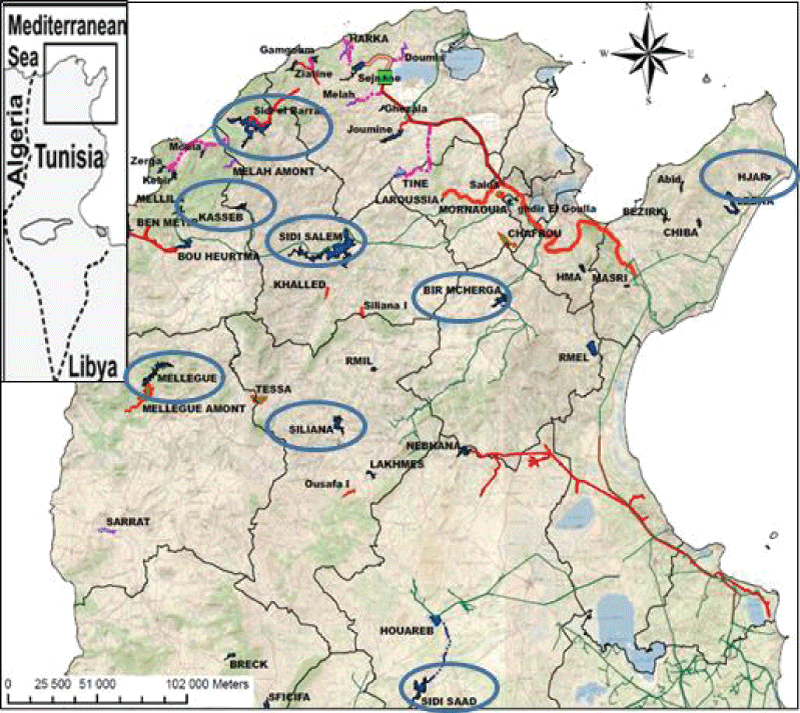
Although assessing fish stocks is essential for sustainable management, quantitative, multi-species evaluations that integrate fishing effort and biological production are scarce in Tunisian reservoirs. This study provides the first comprehensive, standardised assessment of six key species (Cyprinus carpio, Chelon ramada, Luciobarbus callensis, Sander lucioperca, Scardinius erythrophthalmus, and Rutilus rubilio) across eight major reservoirs. It combines multi-mesh gillnet sampling (2013-2016) with yield-per-recruit (Y/R) modelling using VIT software and cohort analysis using FISAT II.
The results reveal a general state of under-exploitation, yet highlight significant differences between species and between reservoirs. Exploitation rates (E) ranged from severe under-exploitation of mullets (E = 0.09) to near-optimal levels of carp in Sidi Saad (E = 0.48). Although fishing mortality exceeded 60% of total mortality for barbel and pikeperch, Y/R analysis confirmed their under-exploited status. This is supported by high biomass per recruit (up to 2,769 g for barbel in Sidi Barrak) and rapid stock renewal rates (over 79% for pikeperch). Notably, estimated surplus production indicates that current landings could be substantially increased without compromising stock sustainability.
We conclude that Tunisian reservoirs have significant untapped fishery potential. However, rather than increasing effort uniformly, we recommend making targeted, site- and species-specific adjustments, coupled with reinforced monitoring of population structure and exploitation rates, in order to prevent any shift towards overfishing. This integrated diagnostic approach provides a replicable scientific baseline for the future adaptive management of North African inland fisheries.