



Abstract
This paper reviews requirements for water supply rate for life support of human crews on deep space missions such as Mars, and approaches to provide a reliable water supply.
The literature on the required water supply flow rate to support human crews in deep-space missions is sparse. Estimates were generated in an era where saving mass was critical, and the allocations were skimpy. Here, we provide updated estimates of the suggested water supply flow rate to support human crews on deep-space missions in an era when mass in deep space is far more affordable. Water a higher flow rate of water to the crew than had previously been suggested.
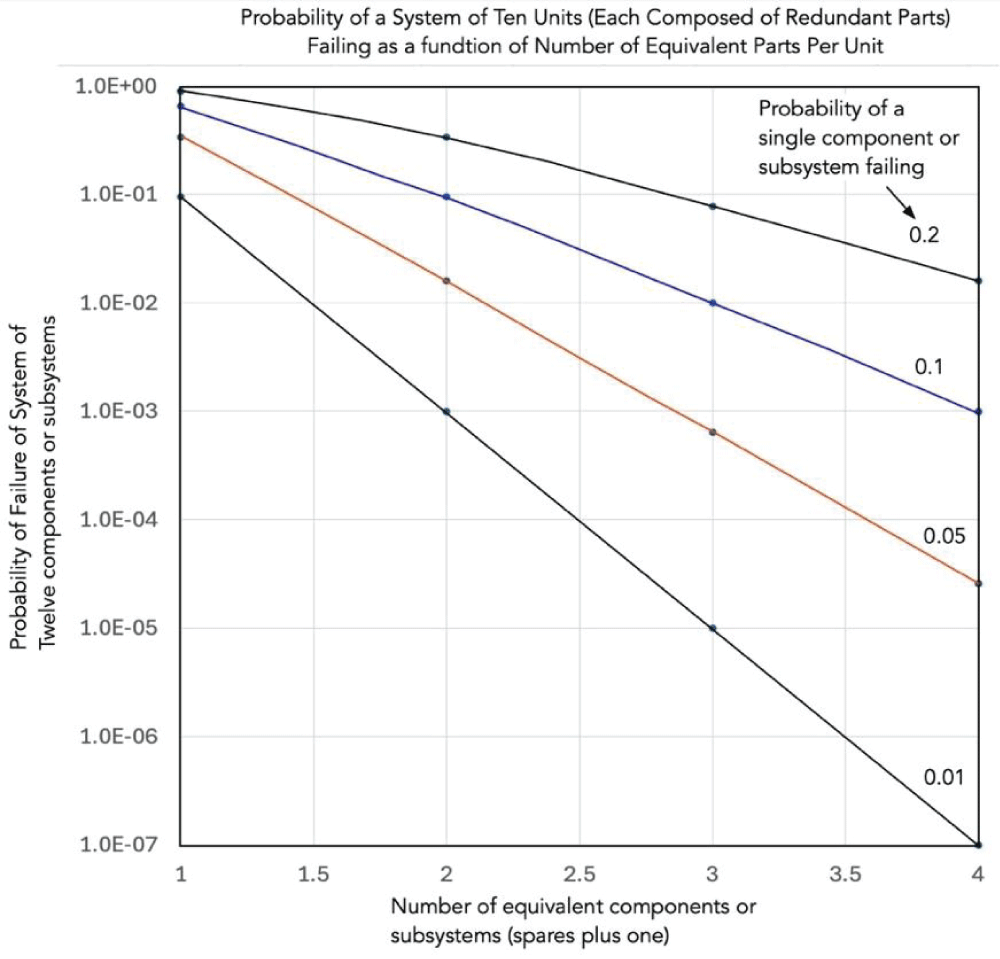
It was widely believed that water recycling systems are necessary to reduce mission mass in the era of high launch costs. However, the reliability of recycling technology is inadequate, as evidenced by experience on the International Space Station. Use of spares to replace subsystems that fail was proposed to greatly improve reliability, and that works well theoretically as shown by probabilistic analysis, but the logistics of validation and implementation are problematic.
Mars mission water system designs should focus on maximizing reliability to provide crew safety. The earlier design goal of reducing launch mass by increasing water recycling closure is now less relevant because of the recent great reduction in launch cost. Reliable water supply for life support can be provided by some combination of stored water from Earth, recycling of wastewater, or use of indigenous Mars water. There is an implicit three-way trade between performance, cost, and risk depending on the mission design.
A simplified human Mars mission that uses the Starship can bring water from Earth, thus avoiding the two difficult challenges of recycling and processing indigenous Mars water, achieving high safety and reliability, and landing at an equatorial site. More ambitious human Mars missions might need recycling and/or indigenous Mars water, but they should always bring survival-level water from Earth. If indigenous water is required, that limits landing sites to around 40°N or higher altitudes.
Bringing water from Earth is the best way to supply crew requirements for limited missions likely to be the first human landings on Mars. For futuristic missions of great extent, either recycling or use of indigenous water from Mars would be needed. Both methods involve significant technical, timeline, and fiscal challenges. In any mission, as a minimum, bringing a survival level of water from Earth is strongly recommended.